St Mary's Church
Home to the tomb of Mary Tudor, Queen of France and one of England’s most magnificent parish churches.




About this Business
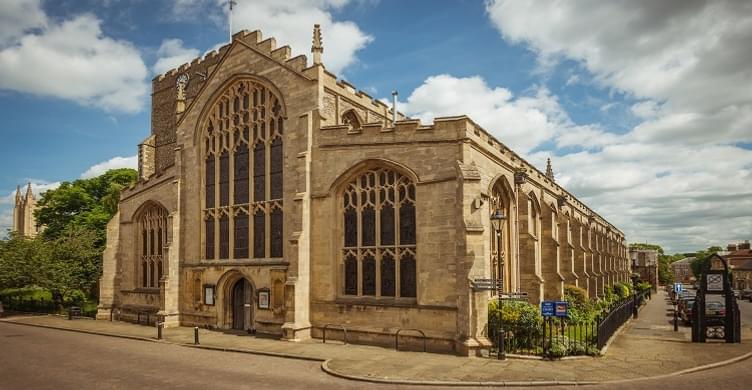
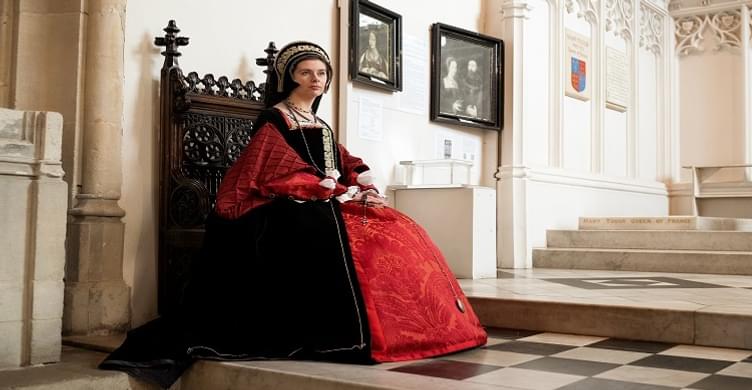
St Mary’s Church is an important part of the Abbey of St Edmund story and is the final resting place of the last Abbot of the Abbey John Reeve and Mary Tudor, Queen of France and Duchess of Suffolk and Henry VIII's favourite sister (after whom Henry's ship the Mary Rose was named).
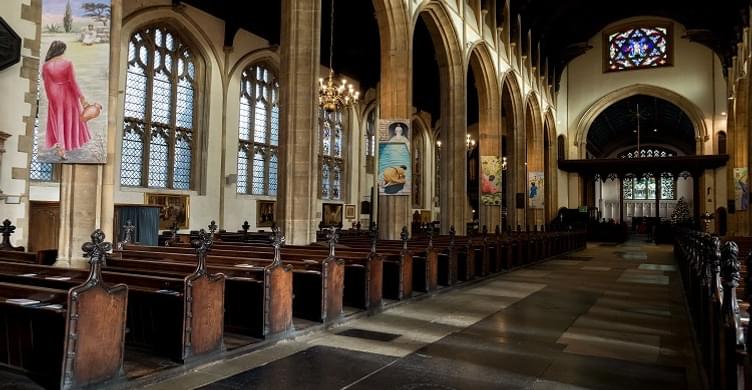
St Mary's Church was built between 1290 and 1490 as part of the abbey complex, and is thought to be the largest parish church in England, has the second longest aisle and the largest west window which was paid for by local landowners as a thanksgiving for the bumper harvest of 1854.
The church also has a unique and beautiful hammer beam ‘angel’ roof, with eleven pairs of life-sized angels. The angels show a procession in honour of the Assumption of the Blessed Virgin Mary.
There are also stunning stained glass windows to explore including the St Edmund window (1844), the Mary Tudor window (1881). Pick up a copy of Images of Faith - a book about the stained glass windows of St Mary's Church written by Robin Goodchild and Rosie Perham.
Mary Tudor Queen of France and Duchess of Suffolk
Mary Tudor, the younger surviving daughter of Henry VII of England and Elizabeth of York, became the third wife of Louis XII of France, more than 30 years her senior. Following his death, she married Charles Brandon, 1st Duke of Suffolk. The marriage, which was performed secretly in France, took place during the reign of her brother Henry VIII and without his consent. This necessitated the intervention of Thomas Wolsey, and although the couple were eventually pardoned by Henry, they were forced to pay a large fine.
Mary died, aged 37, at Westhorpe Hall, Suffolk, on 25 June 1533 and she was first buried at the Abbey of St Edmund on July 21 1533 but when the abbey was dissolved her remains were moved five years later in 1538 to St Mary’s Church, Bury St Edmunds. You can find her very simple tomb to the north side of the altar.
St Mary's and St Edmund
In 869, King Edmund refused to renounce his Christian faith and was killed by Viking invaders. His body was brought to St Mary’s Church, where it was soon venerated in a new shrine.
The fame of Edmund grew far and wide. In 1020, King Canute invited Benedictine monks to establish a much grander abbey. St Mary’s Church and the town itself were displaced to their present sites and the magnificent abbey was constructed where St Mary’s once stood.
The townspeople endured years of hardship under the the Abbey of St Edmund's rule. Repeated uprisings against it prompted the strengthening of its defences, including the construction of the impressive Norman Gate and Abbey Gate—now welcoming entrances to the Abbey Gardens—which were originally built to keep the local population at bay.
When the abbey was finally dissolved, residents reclaimed its finely dressed stone for their own use. Today, only fragments of the vast complex remain on its original site—just enough to suggest its former grandeur. Yet throughout the town, traces of the abbey live on, its stone woven into garden walls, houses, and other buildings.
In contrast, the townspeople held St Mary’s Church in deep affection, preserving it because they regarded it as truly their own. A local benefactor, Jankyn Smyth, paid off the abbey’s burdensome taxes from his personal fortune and extended St Mary’s for the benefit of the community. In gratitude, a commemorative service was established in his honour—one that continues to this day, making it among the oldest services of its kind in the country.
The tomb of the final Abbot of the Abbey of St Edmund John Reeve can be found near the chancel.
The Suffolk Regiment
The church also has the regimental chapel of the Suffolk Regiment, now the Royal Anglian Regiment, and the associated war memorials, standards, colours and cenotaph which recalls the sacrifice of Suffolk people in war.
Opening Times
The church is open Monday – Saturday from 10.30am – 3pm but do check if you are planning to travel a distance as the church does hold services and events which may affect visiting times.
Admission is free. Donations gratefully received.
Contact
Events Manager:
Telephone 07561 334695
Email jackie.crofts@stmaryschurchbse.org
Church Administrator
Telephone 01284 754680 (Wednesdays and Fridays only)
Email katie.jackson@stmaryschurchbse.org
Share this venue




Offers and Events at this Venue

Music for Wellbeing – A Neoclassical Piano…
Award-winning pianist and composer Yaroslav Oliinyk
View More St Mary's Church, Honey Hill, Bury St Edmunds, IP33 1RT
 2nd Oct