Exhibition: Lavenham Guildhall 75 Years
Celebrate 75 Years of Lavenham Guildhall since it passed into the care of the National Trust
- Date
- 16th July 2026 - 20th December 2026
- Time
- 10:30am - 4:00pm
About this event
Celebrate 75 Years of Lavenham Guildhall since it passed into the care of the National Trust, securing its future after centuries of changing fortunes.
This locally curated exhibition explores why the Guildhall was entrusted to the National Trust and how the people of Lavenham helped shape its next chapter - from community hub to museum - still at the centre of our community today.
There’s a feature on cinema and television, which shares how this much-loved building continues to tell new stories, on screen and beyond. Now open in the Community Room on the top floor.
Share this venue




About the Venue
Discover some wonderful stories from our character connections and fascinating facts on your journey through the Guildhall's history.
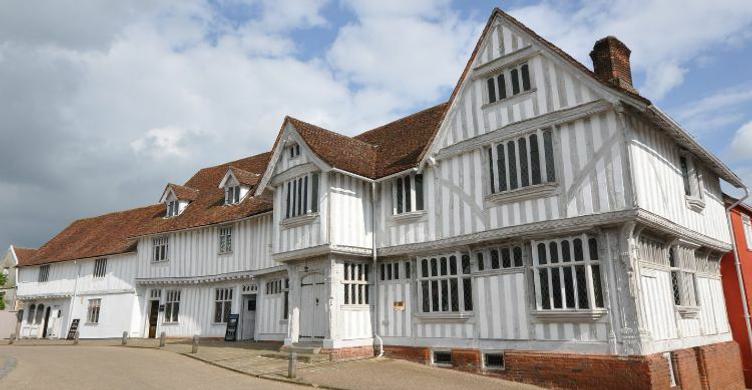
Lavenham Guildhall is properly known as the Guildhall of Corpus Christi and is one of the finest timber-framed buildings in England. The building dates from around 1530 built on the back of the boom of the cloth industry in the early 16th Century.
Despite the importance of the cloth industry in the village, Lavenham's five recorded guilds weren't concerned with the organisation of trade. Craft guilds did exist in Medieval England and the great majority, including Lavenham's Guildhall, were actually social and religious bodies and were focused on their members' souls, rather than their livelihoods.
Originally built as a religious meeting place for wealthy Catholic merchants, the Guildhall has also been used as a prison, a workhouse, a pub, a chapel and a social club for US troops stationed nearby during the Second World War
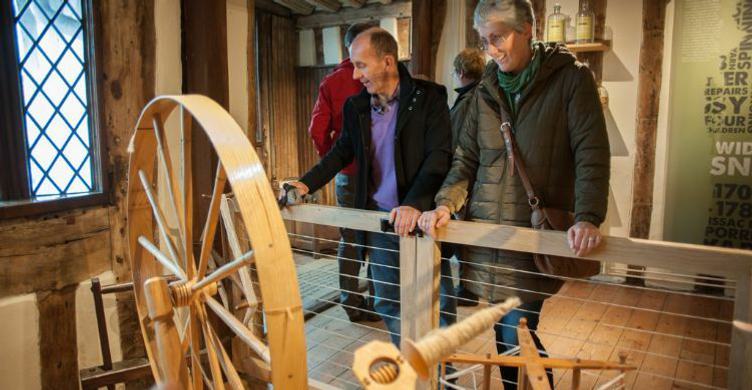
Our interpretation shows a journey of discovery over five centuries of history; seen through the eyes of the people who lived and worked here.
Among the real life stories featured in the exhibition is the tale of Ann Baker, who was imprisoned in the Guildhall when it was used as a prison in the 1780s. Aged just 8-years-old, Ann was whipped and kept locked inside with others who had fallen foul of the sometimes harsh laws of the time. She was later sentenced to seven years transportation to Australia, then a penal colony, for being ‘an incorrigible rogue’. She died at just 29.
Others stories include Widow Snell, who ran the 18th-century workhouse and created a host of intriguing – and sometimes gruesome – looking medicinal recipes to help treat the ailments suffered by the residents. These included adding 20 live woodlice to cough mixture and crab’s eyes to a treatment for catarrh!
We have a small courtyard garden which includes outdoor seating for our Tudor tearoom. We have a range of events and activities throughout the year and a range of family trails are available every day we are open.
Dogs can visit the tearoom and garden, the secondhand bookshop and visitor reception whilst on leads.
Assistance dogs only in the museum.