Print East Print Fair
Print East Print Fair returns to Bury St Edmunds for its second year!
- Date
- 10th October 2026
- Time
- 10:30am - 4:30pm

About this event
Print East Print Fair returns to Bury St Edmunds for its second year!
The Athenaeum, Bury St Edmunds – Saturday 10th October 2026, 10.30 - 16.30.
Print East Print Fair is returning to Bury St Edmunds for its second year, bringing together more than 30 printmakers at The Athenaeum to celebrate the diversity, creativity and accessibility of contemporary printmaking.
The free-entry event will give visitors the opportunity to meet printmakers, discover original artwork and purchase affordable prints directly from the artists who make them. With a wide variety of styles, techniques and approaches on display, there will be something to interest both established collectors and those discovering original printmaking for the first time.
As well as artwork for sale, the fair will offer visitors the chance to get involved through a programme of hands-on printmaking workshops and demonstrations. These activities are designed to introduce people to the processes and techniques involved in printmaking and encourage visitors to have a go themselves.
Printmaking materials will also be available to buy, making it possible for visitors to take their interest further and continue experimenting with printmaking at home.
Print East Print Fair aims to make original printmaking accessible to everyone, providing an opportunity to meet artists, learn about the processes behind their work and discover affordable, original artwork in a friendly and welcoming environment.
Share this venue




About the Venue
The Athenaeum was purpose-built in the early 18th century as Assembly Rooms where the locals could gather to play cards, read books, attend parties and generally have a good time; not that different from its use today!
It was re-named The Athenaeum in 1854 and is a Grade I listed building comprising a number or spaces available for hire, including the ornate Georgian Ballroom, its chandeliered ceiling and grand décor being reminiscent of the days of Pride and Prejudice.
Now owned by St Edmundsbury Borough Council and managed in association with the Council’s catering partners, Sodexo Prestige, it is well known as a ‘local venue for local people’, playing host to wedding receptions, balls, conferences, dinners and much, much more.
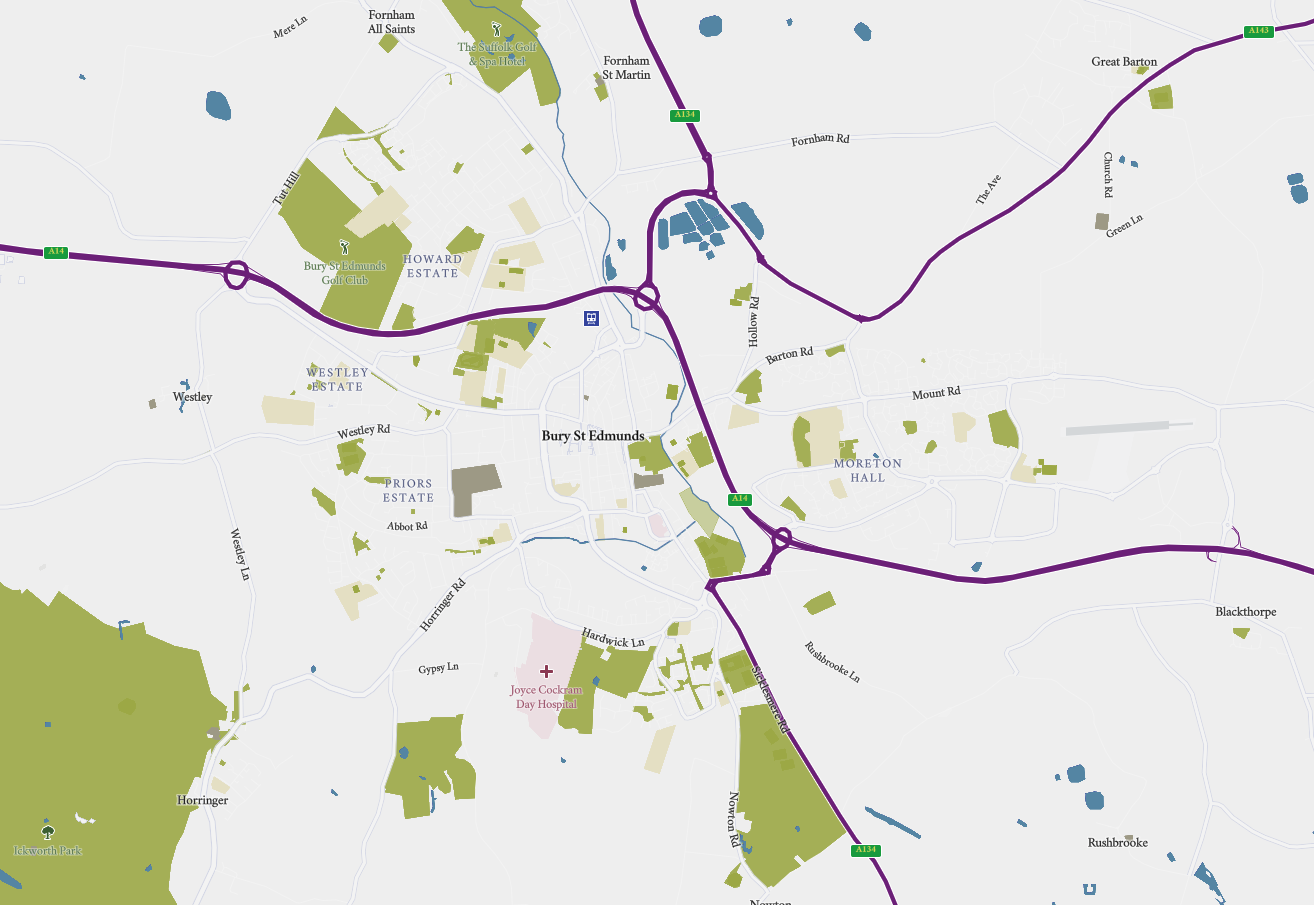
The Athenaeum with its splendid frontage stands proudly in Angel Hill – physically, very much in the centre of historic Bury St Edmunds and intellectually, right at the heart of much of Bury’s history.
The building is adjacent to St Edmundsbury Cathedral, the impressive, 12th century Norman Tower and the magnificent Abbey Gate, which was of course the entrance to the Abbey grounds where once stood one of the most powerful and influential monasteries in England.
It is also right next to the Angel Hotel where Dickens stayed in 1859 and 1861 when he was giving readings in The Athenaeum. The Bury St Edmunds records office holds a lovely letter from Dickens, thanking his friend Mr Thompson, who was at the time the proprietor of the subscription rooms (now the Athenaeum) and who had arranged for him to read from David Copperfield. Oscar Wilde, The Rev Charles Kingsley, author of Westward Ho and The Water Babies, as well as W M Thackeray, author of Vanity Fair, also gave readings at The Athenaeum in the 1800s.
A feature of the Athenaeum which is of particular interest is a fair-sized, domed observatory on the roof, containing a telescope. A lecture on Astronomy was held by Sir James Airy, 7th Astronomer Royal in October 1858, at which time, by happy coincidence, the impressive Donati’s comet happened to be looming large in the night sky.
These two events combined, so inspired members of the Institute that they felt moved to build the observatory! Airy advised on the design of the dome and choice of telescope to furnish it, which was to be enjoyed by the thriving Astronomical Society that arose to utilise it. The observatory today has fallen into disrepair, but still exists as a fantastic time capsule of Victorian astronomy.