


Back to Blogs
Discover
Discover St Edmundsbury Cathedral Bury St Edmunds
Discover the beauty and history of St Edmundsbury Cathedral in Bury St Edmunds, one of Suffolk’s most inspiring landmarks. From the vibrant Nave Roof decorations and stunning Victorian stained glass windows to iconic artworks like Elisabeth Frink’s Crucifixion, the cathedral offers an unforgettable journey through art, architecture, and spirituality. Visitors can also explore the fascinating Ancient Library, home to rare historic books, the Cathedral Treasury with its rich collection of treasures and artefacts, and the impressive Millennium Tower, which defines the cathedral’s skyline. Whether you’re interested in history, culture, or simply looking for the top things to see in Bury St Edmunds, this guide will help you discover the very best of this remarkable cathedral.
Explore 1,000 years of history and beauty at Suffolk’s Cathedral.
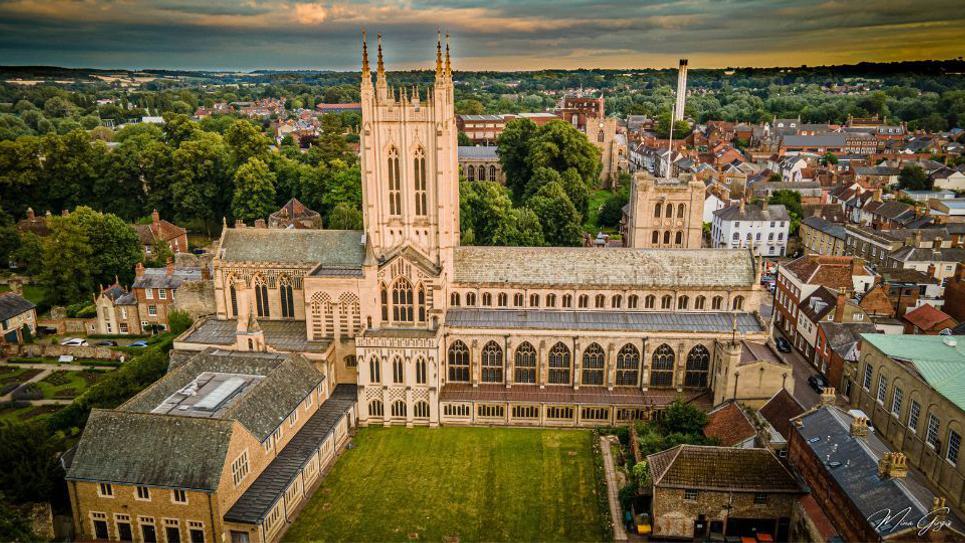
Step into over a thousand years of history at Suffolk’s Cathedral — a place where faith, story, and architecture come together in a truly unforgettable way.
St Edmundsbury Cathedral stands on a site steeped in legend. In 869, Edmund, King of the East Angles, was killed by invading Danes, and his legacy inspired the creation of a great abbey to house his remains. Within its grounds, St James’s Church was built — a building that would grow and evolve over centuries before becoming a Cathedral in 1914.
Today, the Cathedral blends ancient heritage with striking modern craftsmanship. Don’t miss the impressive Millennium Tower, completed in 2005, or the breathtaking painted and gilded ceiling, added in 2010. In 2009, the Cathedral was rededicated as the Cathedral Church of St James and St Edmund, reflecting its rich and layered history.
Visitors are warmly invited to explore at their own pace. Entry is free (donations are always appreciated), and a helpful introductory leaflet is available in several languages, including English, Dutch, French, German, Italian, and Polish. You’re also welcome to join one of the daily services or take part in a guided tour to discover even more of the Cathedral’s fascinating past.
People often assume that Bury St Edmunds must be a city because it has a Cathedral but that's not correct. According to local historian Martyn Taylor, there are 26 Cathedral Towns in the UK.
Whether you’re here for quiet reflection, history, or simply to admire the beauty, there’s something for everyone to experience.
Discover the Interior of St Edmundsbury Cathedral in Bury St Edmunds

Step inside St Edmundsbury Cathedral, one of the most remarkable landmarks in Bury St Edmunds, and experience a perfect blend of history, artistry, and architectural beauty. The cathedral’s stone and limewashed plaster walls provide a bright, welcoming space, while the ceilings feature vibrantly painted panels with intricate motifs. These Nave Roof decorations, completed in the 1980s using delicate stenciling, bring a modern yet timeless charm to this historic interior.
The decorative theme continues downward to the handsome font cover, a moving memorial to the First World War, and the Victorian tiled floor laid in 1865. Visitors will also notice the East End’s Suffolk paving, with its randomly coloured local stones, adding a distinctive regional touch.
Victorian Stained Glass Windows
The cathedral’s stained glass windows are a visual highlight, mostly dating from the Victorian era. They narrate biblical stories, with the North Nave windows illustrating Old Testament scenes and the South Nave windows showcasing New Testament stories. As sunlight filters through the glass, it casts colourful reflections across the interior, creating a serene and contemplative atmosphere.
Iconic Sculpture and Art
Art lovers will be drawn to the cathedral’s collection of sculpture. The most prominent is the Elisabeth Frink ‘Crucifixion’, located at the top of the Treasury stairs. Suffolk-born Frink also created the striking statue of St Edmund in the Great Churchyard, commemorating the historic West Suffolk County Council. These works blend modern artistry with spiritual symbolism, making them a must-see for visitors.
Historic Features to Explore
Every corner of St Edmundsbury Cathedral reveals unique details. The bishop’s throne (cathedra) is finely carved and symbolically significant, while the font and ornate cover near the entrance demonstrate exquisite craftsmanship and vivid decoration. From historic memorials to contemporary sculptures, the cathedral’s interior offers a rich visual journey for tourists, history enthusiasts, and art lovers alike.
The Treasury

The Bury Psalter
Visitors can view a wonderful collection of treasures at St Edmundsbury Cathedral including the beautiful Bury Psalter - an illuminated book of psalms made and used at the Abbey of St Edmund.
There's a beautiful replica of The Bury Cross or Cloisters Cross made by Master Hugo during the days of the Abbey. The real cross is on display The Met in New York.
The Bury Psalter, which contains the earliest textual evidence for the Abbey from about 1050 remains in one of the most secure buildings in the world, the Vatican Library. The Bury St Edmunds Psalter is a famously beautiful copy of the Psalms with marginal line-drawings. Containing state papers, correspondence, account books, and many other documents that the church has accrued over the centuries, the Vatican Library and Archives has been cloaked in mystery for years but many of the documents the library holds can now be seen online. See the Bury St Edmunds Psalter from around 1050 online at the Vatican Library website.
Bury St Edmunds Psalter
A later Bury Psalter (1398 and 1415) was written at the Benedictine Abbey of St Edmund, probably between 1398 and 1415, and is a wonderful example of an English monastic service book. It is the latest addition to the Cathedral Treasury.
This later Bury Psalter was presented to the King Edward VI School by James Hervey in 1706, having once belonged to his grandfather, James Cobbs, who owned a number of manuscripts from the Abbey of St Edmund in his private collection. It was looked after by Suffolk Archives for many years until the Bury St Edmunds Archives closed and from 2026 it is now on permanent display at St Edmundsbury Cathedral's Treasury.
The Bury Psalter comprises a Calendar, the Psalms of David, Canticles, Litany and Preces, Placebo and Direge (Offices of the Dead), Canticles for Christmas and other festivals and a Hymnarium with musical notation.
Medieval Psalters, comprising 150 Psalms, were often divided into ten sections for daily recitation, with historiated initials and additional decorative treatment marking the main divisions at Psalms 1, 26, 38, 51, 52, 68, 80, 97, 101 and 109. This is exactly the case with our Bury St Edmunds Psalter. The texts are framed by partial bar borders on flourished grounds of various rich colours contrasted with lavish gold.
The Ancient Library

The Ancient Library
Hidden within St Edmundsbury Cathedral in Bury St Edmunds is The Ancient Library, the oldest parish library in the country with a treasure trove of books and a wealth of local stories.
The Library was founded by Dr Miles Mosse in 1595 as a resource for clergy training. He gained sponsorship to set up the library and book plates from that time show that at least 41 local clergy, gentlemen and townspeople contributed.
The Ancient Library at St Edmundsbury Cathedral is open to the public on special days, heritage weekends and by appointment. It contains around 600 books on theology, maths, herbal remedies, history and more. There are some rare volumes and many of the books were printed in the sixteenth and seventeenth centuries, with the oldest from 1482.
The rarest book in the collection is a Bulbus 1499 dictionary with its illustrated capitals and beautifully ornate handwriting.
Rare Books and Local Stories
But it is not the rarity of some of the books, the editions, the language of the books (many are in English, French, Greek and Latin), or fine binding that makes this library unique.
While the library is fascinating for anyone interested in books, librarian Stephen Dart believes what is so special about this hidden gem is the links with local people of the time – including gentry – who donated the books, such as Sir Robert Jermyn. It is also the donor’s inscriptions, doodles or margin notes in the books and medieval manuscripts that give them a special value. The drawings and notes that have been scribbled inside, known as ‘marginalia’, and the pastedowns – inserted sheets to strengthen the binding – that were made from whatever was available, provide an insight into the past.
If you would like to visit the library, please contact the librarian through the Cathedral Office on visits@stedscathedral.org or 01284 748730.
The Millennium Tower
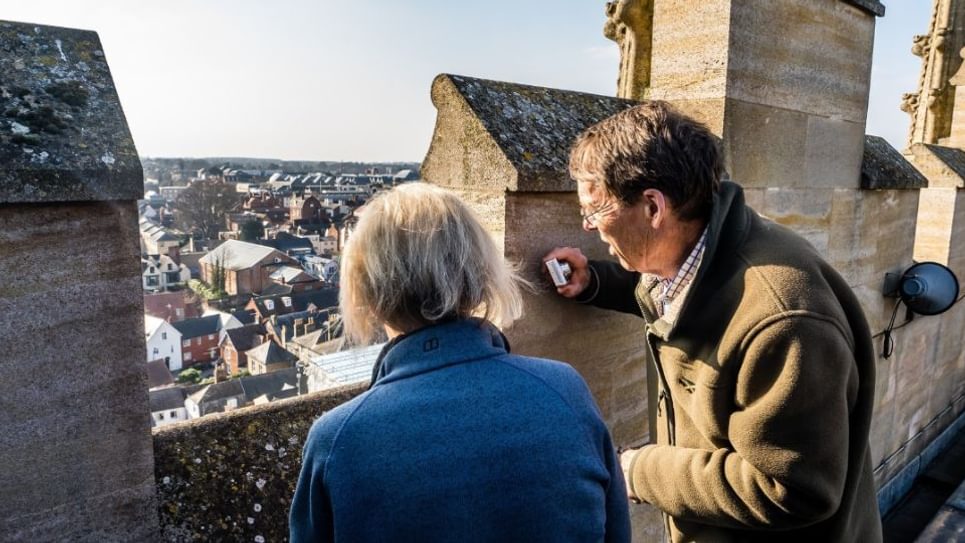
For visitors to the town it's difficult to understand why the tower is just 20 years old as the church itself was mainly built in the 16th Century.
But up until 20 years ago the only Cathedral in Suffolk did not have a tower. The Millennium Project saw the completion of the building with the addition of a tower, new cloisters and chapels.
King Charles
In January 1998 King Charles, then the Prince of Wales, who had expressed an interest in seeing Britain’s last unfinished cathedral finally completed, visited Bury St Edmunds to hear about the project and in May of that year he agreed to be Patron.
Barnack Limestone, not used for construction for more than 500 years, was discovered by chance at a Lincolnshire quarry to ensure the tower looked as if it had always been there.
Work on the tower was finished in July 2005, with a special service that year to mark its completion attended by Their Royal Highnesses Charles, the Prince of Wales and Camilla, the Duchess of Cornwall.
Tower Tours
Experience the Cathedral from a new perspective on a Tower Tour!
Tours include a behind the scenes look at the Cathedral building and specifically, the tower finished in 2005. You’ll slowly climb the tower, with view points along the way while you learn more about the build and the history of the building and town.
After climbing 202 steps, the big reveal from the tower roof is unparalleled views across the Bury St Edmunds skyline.
Pilgrims Kitchen
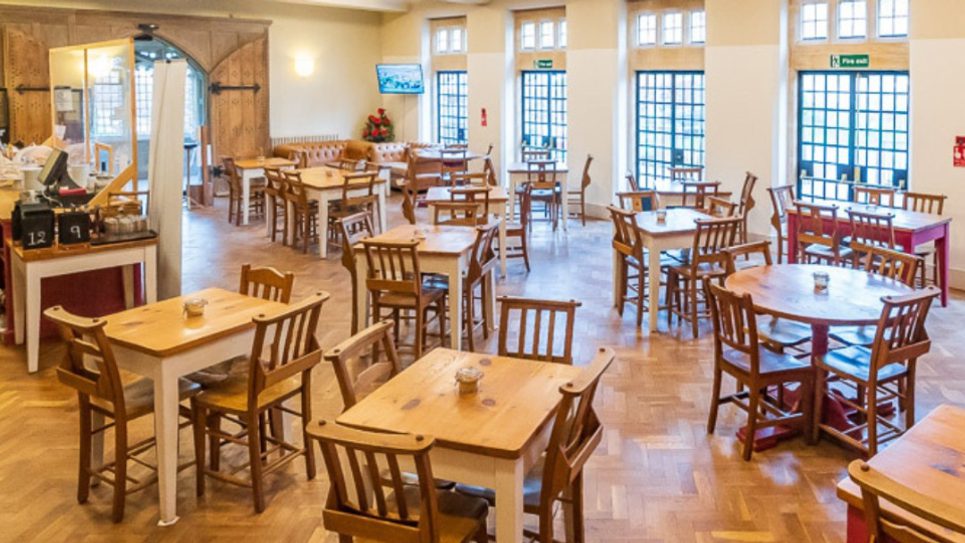
After touring the Cathedral why not relax with a cuppa at the Cathedral's cafe?
Pilgrims' Kitchen is an inviting eating space with rustic furniture, quirky chapel chairs, pots of fresh herbs and heritage colours, along with a beautiful outdoor dining space in the walled garden.
Inside, comfy sofas offer a more relaxed area for a cup of coffee, or the chance to catch up friends – young friends are catered for too, with highchairs and toys. Wifi is now available.
The cafe offers Suffolk-based Paddy and Scott's coffee as well as Fairtrade tea, James White Apple juice and a choice of Fairtrade wine or the iconic Greene King St Edmund's ale.
Home cooked, locally sourced fayre, the signature food of chef, Paul Hughes, still tops the menu. Order at the counter, and the staff will bring your freshly prepared meal to you.
Locally sourced ingredients - sauces from Stokes of Woodbridge, jams and chutneys from Elveden Estates – are key to the choice of food on offer.
Cakes baked on the premises as well as their famous cheese scones are available. Get there early for the scones as these are a favourite of the Cathedral staff!
Related Blogs
News
Horror isn’t just for…
Horror is not just for Halloween in West Suffolk where…
News
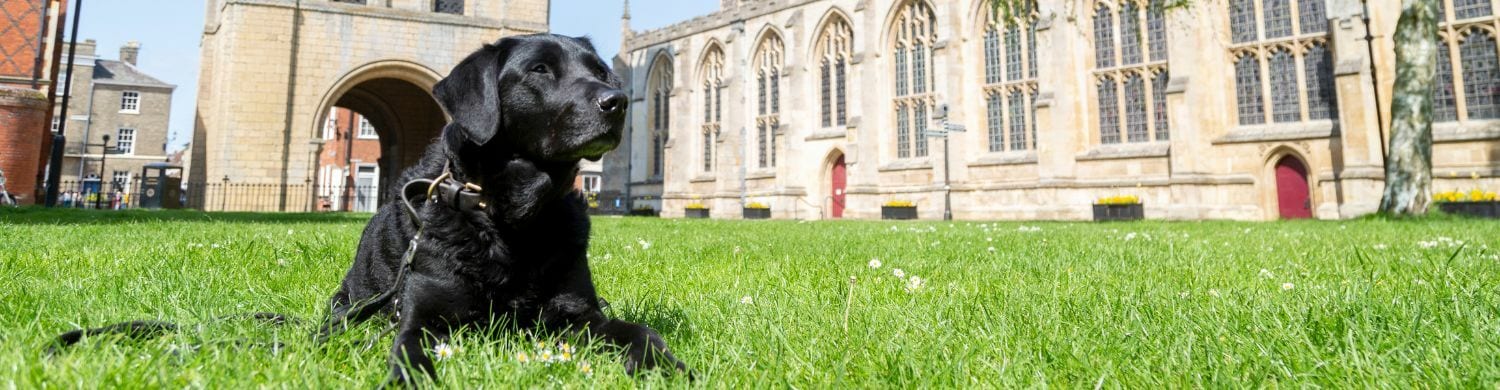
Bury St Edmunds reaches Dog…
The historic Suffolk town won the title of the UK’s…
News
Abbeygate Cinema Voted One Of…
Abbeygate Cinema has been voted one of the 15 best…

News
First Memorial for Victims of…
New memorial at museum will focus on the victims and a…
News
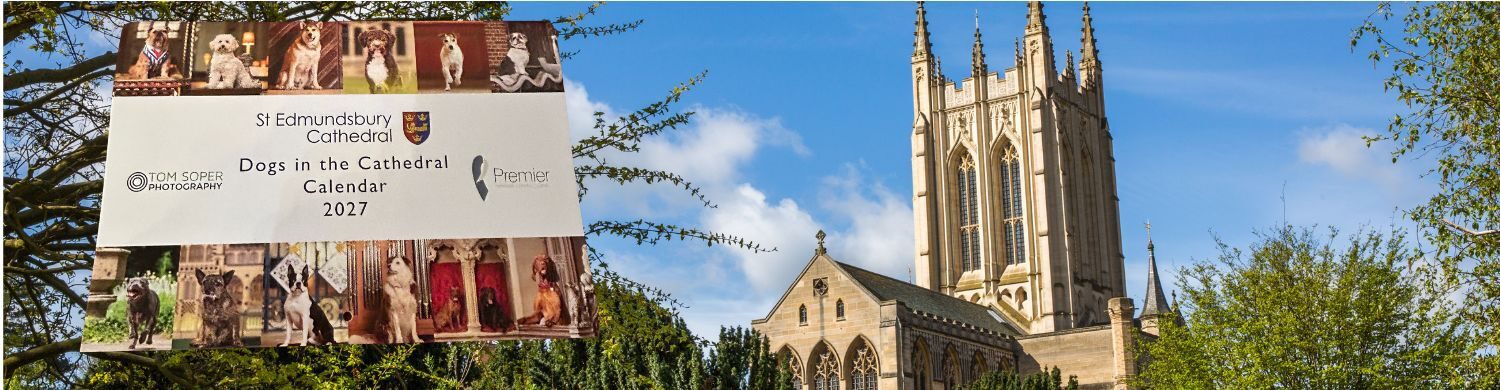
St Edmundsbury Cathedral…
Twelve local dogs were photographed for the 2027…
Latest news

News
Horror isn’t just for Halloween at Moyse’s Hall
Horror is not just for Halloween in West Suffolk where visitors will have plenty to sink their teeth into at a new exhibition that opens this weekend.

News
Bury St Edmunds reaches Dog Friendly Awards finals for fourth year running
The historic Suffolk town won the title of the UK’s Most Dog Friendly Town in 2024, and is now hoping to reclaim the title.

News
Abbeygate Cinema Voted One Of The Top 15 Best Cinemas in the UK
Abbeygate Cinema has been voted one of the 15 best cinemas in the UK in the British Independent Film Awards’ (BIFA) Cinema of the Year awar.

News
First Memorial for Victims of the Bury St Edmunds Witchcraft Trials
New memorial at museum will focus on the victims and a new play will bring to life the trial that links Bury St Edmunds to Salem.

News
St Edmundsbury Cathedral Launches 2027 Dogs In The Cathedral Calendar
Twelve local dogs were photographed for the 2027 calendar!

News
New Pumpkin Carving Competition Launches in Bury St Edmunds
We are inviting families, schools and budding pumpkin artists to take part in a spooktacular pumpkin carving competition this Halloween!

News
Bury St Edmunds Pumpkin Carving Competition
This Halloween, we’re inviting families, schools and budding pumpkin artists to get creative and carve a pumpkin inspired by the fascinating witch trial history of Bury St Edmunds.

News
Where to See Santa in Bury St Edmunds
Our guide to where you can see Santa this Christmas in Bury St Edmunds!

News
Bury St Edmunds Bids to Reclaim UK’s Most Dog Friendly Town Title
Vote now for Bury St Edmunds in the UK Dog Friendly Awards!
